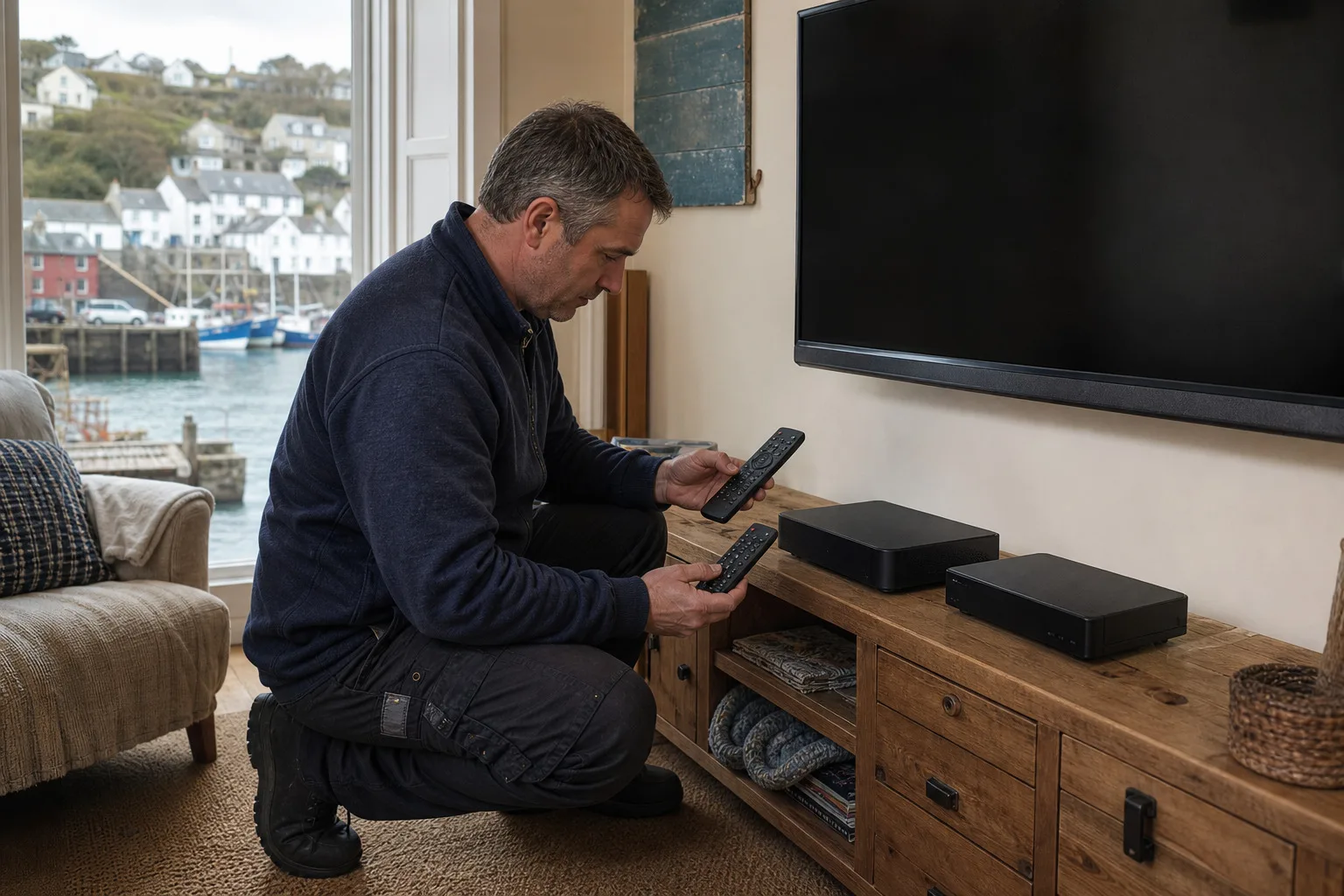
If you're upgrading your DStv box, the choice usually comes down to two decoders: the well-established DStv Explora and the newer DStv Ultra. Both record, both stream, both will give you a great experience: but they suit slightly different households, and spending a few minutes getting the choice right saves you money or regret later. Here's the plain-language version, without the sales pitch.
What they have in common
Start with the things that don't separate them. Both decoders give you live DStv channels, the ability to record and to pause and rewind live TV, and a connection to the internet for Catch Up and on-demand content. Both want a solid internet link to be at their best, and both are only as good as the install behind them: a brilliant decoder fed by a drifting dish and a flaky WiFi connection is a frustrating decoder. Whichever you choose, the dish needs to be properly aligned and the box needs a stable connection to the network.
The DStv Explora
The Explora is a proven workhorse. It has generous recording space, a familiar interface that most South African households already know, and it does the core job: live TV plus solid recording: extremely well. If you mainly want to watch your channels, record a few series, and occasionally dip into Catch Up, the Explora is a cost-effective, dependable choice that won't leave you wanting.
It's often the right call for a lounge in a permanent home where live sport and recorded series are the main event, and for households that don't particularly care about having the very latest streaming apps baked into the TV box because they already stream on a smart TV or a phone.
The DStv Ultra
The Ultra leans hard into streaming. It brings Showmax, Netflix and apps together with your DStv channels in one snappier, more modern interface, so you're not constantly switching inputs or hunting for the right remote. If your household streams as much as it watches live TV: or you're tired of juggling a separate streaming stick, the TV's own apps and the decoder: the Ultra pulls it all into a single box and a single remote.
It's the better fit for homes where streaming is already a big part of the evening, for younger households, and for anyone who values a tidy, all-in-one experience over squeezing the last rand out of the budget.
So which one?
Here's the short version we give people when we quote:
- Choose the Explora if live TV and recording are your priority, you want the best value, and you're happy streaming elsewhere.
- Choose the Ultra if streaming is central to how you watch, and you want everything: channels and apps: in one place with one remote.
There's no wrong answer here, only the one that fits your home. And if you're running TV in more than one room, the decision interacts with how you set up the rest of the house: a second room can run on a linked decoder through an XtraView setup so the whole family watches different channels on one subscription, while the main box does the streaming heavy lifting.
The part people forget: the install
Whichever box you pick, the real difference between "great" and "frustrating" is the installation. The decoder needs to be connected to your internet properly so Catch Up, Showmax and the apps actually load; the dish needs to be aligned so the live channels never stutter; and the WiFi needs to reach the lounge with strength to spare. We handle all of that as part of an Explora or Ultra installation: migrating your old recordings and settings where we can, pairing the smartcard, signing you into the apps and walking you through the features so nothing you're paying for goes to waste.
Whichever box you choose, we're the DStv installation Gansbaai team that gets it running properly: book an Explora or Ultra decoder installation and we'll set up streaming, recordings and the smartcard before we leave.
If your internet doesn't reach the TV cleanly, that's worth fixing at the same time rather than living with buffering: strong, stable WiFi is the quiet ingredient that makes a modern decoder shine. We'll happily talk through which box fits your home, and what it'll take to get the very best out of it, when we come to quote.
Keep reading
DStv XtraView Not Working in Gansbaai: 7 Heartbeat Fixes
Second TV dead while the lounge decoder works fine? Here is how the DStv XtraView heartbeat works, the…
TroubleshootingWhat to do when your signal drops in bad weather
A storm rolls in and the picture freezes. Before you panic, here's what's usually going on: and the…
tips-guidesDStv Installation Cost in Gansbaai: A Practical Quote Guide
The cost of a DStv installation in Gansbaai depends on the property, the equipment already on site and…