Gansbaai accommodation often serves visitors who arrive for marine and shark-tourism activities, weekend breaks or Overberg road trips. After an early departure, a weather change or a long drive, guests expect the television to work without a lesson in remotes and input menus. The best system is not necessarily the one with the most equipment. It is the one that fits the property's rooms, operating model and support capacity.
This guide is independent and does not imply a partnership with any tour operator, accommodation platform or tourism body. It focuses on practical planning for guest houses, lodges and self-catering units.
Begin with the guest journey
Walk from check-in to the room as if you were a first-time visitor. Can the guest turn on the television with one clearly labelled remote? Does it open on the correct input? Is there a short channel or input note? Can staff reset the system without climbing behind furniture?
These questions determine equipment placement and handover. A technically capable commercial DStv setup still creates complaints if guests cannot operate it. Confirm the current subscription and licensing arrangement directly for the type of accommodation you run.
Map rooms before choosing hardware
Create a simple room schedule with the television size, desired channels, decoder location and cable route for every space. Include lounges, bars or reception areas separately from bedrooms. Decide whether rooms require independent viewing or whether a smaller shared offering is sufficient.
A domestic Extra View setup may suit certain compatible residential arrangements, but it should not be assumed to meet a commercial accommodation need. The correct distribution design depends on property scale, room independence and provider terms.
Design for simple operation
Keep the television on the right input
Where possible, configure the room so the expected source is obvious. Label HDMI inputs and keep unused remotes away from guests. If the TV returns to a home screen after a power interruption, include a two-step recovery note near the remote.
Make equipment accessible to staff
Do not seal decoders in unventilated cabinets or mount them where staff cannot see indicator lights. Leave enough space to reboot equipment and read model information. If equipment is centralised, label the room served by each cable.
Plan connected features honestly
Streaming and connected decoder features need reliable coverage at the device, not only a fast fibre package at the router. Include WiFi and fibre network planning in the room survey. Measure weak areas and use wired links or correctly placed access points where practical.
Prepare for busy weekends and early departures
Guest faults often arrive when staff are handling breakfast, departures and activity schedules. Build a short support checklist that anyone on duty can use:
- Check that the television and decoder have power.
- Confirm the selected input.
- Read the on-screen error exactly.
- Check whether one room or the whole property is affected.
- Restart only the affected equipment using the documented sequence.
- Escalate with the room number, error and indicator status.
This information helps distinguish an in-room input issue from a distribution or signal fault. It also prevents repeated random resets across the property.
Satellite and cable planning for accommodation
A shared service must be designed so one loose connector does not create a confusing property-wide fault. Cables should be labelled at distribution points, kept clear of maintenance traffic and documented on a simple plan. Outdoor components need secure mounting and careful sealing in the coastal environment.
If a room loses picture, targeted signal fault finding should establish whether the issue is local to that room or begins at the shared source. Dish position should be checked with measured alignment when readings indicate a reception problem.
Television placement affects the room
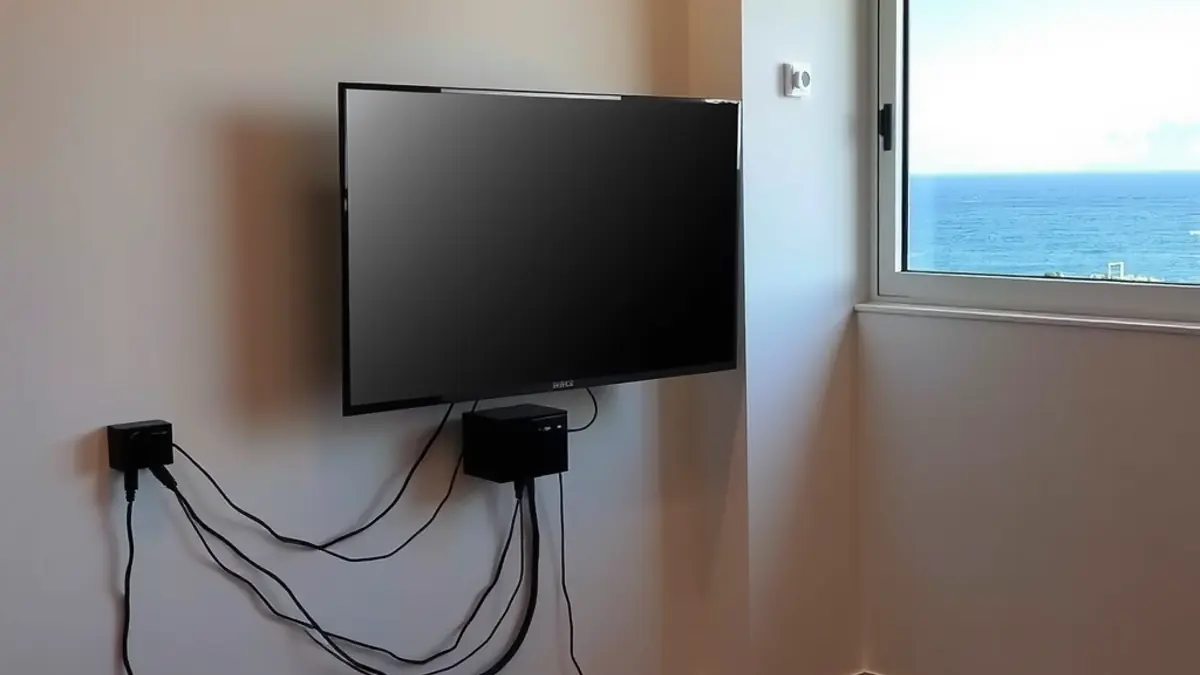
Guests should be able to watch comfortably without the screen obstructing circulation or reflecting a bright window. Professional TV wall mounting should consider wall construction, bracket rating, viewing height, access to ports and cable concealment. Do not place a TV where a luggage bag can strike it or where housekeeping needs to move it for cleaning.
Leave ventilation around decoders and network equipment. A clean-looking locked cabinet can create heat and turn a simple restart into a maintenance call.
Consider a backup viewing option
A property may choose to provide a simple alternative source in selected common areas. Openview HD is a separate free-to-air platform with its own compatible equipment and channel offering. It is not a direct substitute for every DStv requirement, but it can form part of a deliberate entertainment plan.
Similarly, a TV aerial may be relevant where terrestrial reception and local broadcast availability meet the property's needs. Assess reception rather than promising channels before testing.
Document the system for staff and contractors
Keep a property file containing decoder models, subscription contact details, equipment locations, a cable map, WiFi names for staff use and the approved restart procedure. Record changes after upgrades. Do not store account passwords on a public room instruction sheet.
For every room, provide a concise guest card. It should say how to turn the system on, choose the correct source and contact reception. Avoid technical explanations. Staff documentation can be more detailed and should include the point at which an installer is called.
Maintenance between high-occupancy periods
- Test every room from the guest remote.
- Replace weak remote batteries and remove duplicates.
- Check that wall brackets and visible cables remain secure.
- Confirm that room labels match distribution labels.
- Test connected features from each decoder position.
- Review the support sheet after equipment or subscription changes.
Schedule checks before a peak period rather than on the first fully booked evening. Preventive testing is especially useful after building work, painting, furniture moves or long vacancies.
Security and connectivity belong in the same property plan
Entertainment is only one low-voltage system competing for routes and equipment space. If the property also needs CCTV installation, coordinate camera coverage, recorder placement and network load with the television plan. Cameras should serve a defined security purpose, respect guest privacy and follow applicable requirements. Never place cameras in private guest spaces.
A coordinated plan can separate guest WiFi from operational devices, keep recorders secure and reduce visible cabling. It also makes future support easier because each system is labelled rather than improvised.
Planning television service for guest accommodation in Gansbaai? Start with a room schedule, required viewing experience and current network layout so the system can be scoped around your operation.
Frequently asked questions
Is a normal home DStv setup suitable for a guest house?
Not automatically. Guest accommodation may need a commercial subscription or distribution arrangement based on how rooms are offered and used. Confirm current provider requirements for your operation before choosing hardware.
How many decoders does guest accommodation need?
That depends on the number of rooms, whether each room needs independent viewing and the chosen distribution design. A room schedule should be completed before equipment is specified.
Can guest rooms use streaming as well as DStv?
Yes, if the property has sufficient internet capacity and reliable coverage at each device. Streaming access, account handling and guest privacy should be planned rather than left on shared personal profiles.
How can staff troubleshoot a room quickly?
Give staff a short process covering power, input selection, the exact error, whether other rooms are affected and the approved restart sequence. Label equipment and cables by room.
Should CCTV be connected to the guest WiFi network?
A separate or appropriately segmented operational network is generally easier to secure and manage. The final design should consider recorder location, remote access needs, bandwidth and guest privacy.
Keep reading
OpenView Decoder Price Questions Answered
What the OpenView decoder costs, what the box leaves out, and how a coastal roof changes the total…
GuidesDStv Decoder Cables in Gansbaai: 4 Leads and Easy Fixes
Black screen or E48-32 again? Here is what each DStv decoder cable does, why salt air and wind…
tips-guidesDStv Installation Cost in Gansbaai: A Practical Quote Guide
The cost of a DStv installation in Gansbaai depends on the property, the equipment already on site and…